
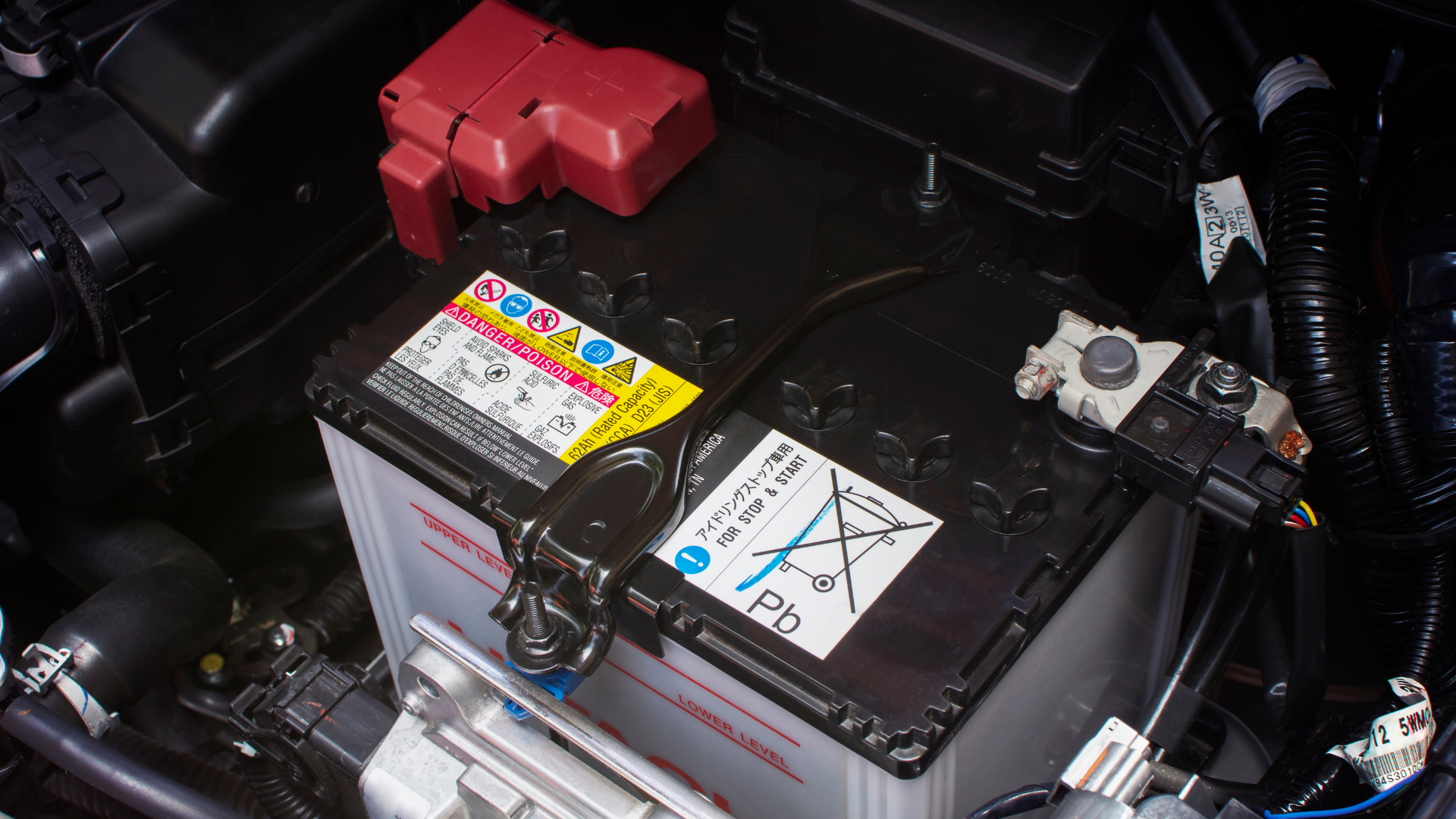
Mobile Battery Replacementin Cardiff, Newport & Bristol —test, fit, code, done.
Car won't crank, or start-stop has stopped stopping? We test your existing battery, supply a matched replacement, fit and register it to the vehicle's charging system on the spot. Modern cars need coding — not just bolting.
Typical arrival 30–45 minutes · card payments at the kerb · IMI-certified · NTDA member.
Battery Replacement — done properly, on your driveway.
What it is
Battery replacement is the diagnosis and swap of a failed 12v starter or auxiliary battery — but on modern cars it's also the registration of the new battery with the vehicle's Battery Energy Management (BEM/BMS) system so the alternator charges it correctly.
Who it's for
Anyone with a car that won't crank, cranks slowly, has flat-battery warnings on the dash, or whose start-stop system has stopped working. Also drivers whose cars stand for long periods.
When you need it
As soon as slow cranking appears, or at the first jump-start. Batteries almost never fail slowly-and-recover — once one has needed a jump, its remaining life is measured in weeks, not months.
Why it matters
A car built with a smart alternator and a start-stop battery relies on the ECU knowing exactly what battery is fitted. Bolt in an unregistered replacement and the alternator either overcharges it (short life) or undercharges it (won't start). Registration is what makes the new battery actually last five years.
- Battery test before replacement
- Supply and fit at your location
- Battery registration where required (BMS/BEM)
- Cars and vans
The cost of ignoring it is rarely the cost you expected.
Ignoring slow cranking
You'll be jump-starting from a supermarket car park within a fortnight — usually in the rain, and usually late.
Fitting a non-AGM battery to a start-stop car
AGM (Absorbent Glass Mat) batteries handle the deep-cycle abuse of start-stop; standard flooded batteries don't. Fit the wrong one and it fails in months, not years.
Not registering the new battery
The BEM system continues to charge the new battery like the old one — usually overcharging it. Life drops from 5 years to 18 months and warranty is void.
Five steps. Same every time. No surprises.
-
01
Battery test
Digital tester used to measure cold-cranking amps, state of charge and internal resistance — so you know it's actually the battery, not the alternator or a parasitic drain.
-
02
Correct spec sourced
Type (flooded, EFB, AGM), size, terminal layout and CCA rating matched to the vehicle — including AGM/EFB where required.
-
03
Safe removal
Memory-saver connected where needed to preserve radio codes, ECU adaptations and window one-touch settings. Old battery removed and taken for recycling.
-
04
Fit & register
New battery fitted, terminals cleaned and greased, hold-down secure. Battery registered to the ECU using OBD tooling on cars that require it (most VAG, BMW, Ford, Volvo, Land Rover, PSA).
-
05
Verify & drive-cycle
System scanned for faults, cranking voltage checked, start-stop function verified where applicable.
Concrete outcomes — not slogans.
Testing before replacing
You don't pay for a battery you didn't need.
Correct chemistry & spec
AGM, EFB or standard as the vehicle requires — not one-size-fits-all.
Registered to the ECU
New battery gets the charging profile it was designed for.
Memory saved
Radio codes and window settings preserved across the change.
Old battery recycled
Environmentally compliant disposal, included.
Same-day on your driveway
No towing to a dealer, no dead car overnight.
Mobile Battery Replacement — the bits fitters usually skip.
AGM, EFB, and flooded — what your car needs
Flooded (traditional) batteries suit older cars with no start-stop. EFB (Enhanced Flooded Battery) is designed for entry-level start-stop and light regenerative braking. AGM (Absorbent Glass Mat) is required for start-stop cars with heavier auxiliary loads and full regen — most premium marques over the last decade. Fitting a lower spec than the car requires is one of the most common quick-fit mistakes and one of the fastest ways to burn through a battery in a year.
Battery registration and why it matters
Modern smart alternators run a variable charging voltage based on what the ECU believes the battery's state and age to be. When a new battery is fitted, that model resets — but only if the fitter tells the ECU. Without registration, the ECU keeps compensating for an old, high-resistance battery: overcharging a new low-resistance one and cooking it. We register on every car that supports it (VAG group, BMW, Ford Focus/Fiesta/Kuga onwards, Land Rover, Volvo, PSA, Renault, etc.).
Cold weather, short trips, and battery lifespan
Two things kill batteries: heat (which dries the electrolyte and speeds internal degradation) and repeated short trips (which never fully recharge them). A typical AGM battery lasts 4–6 years; a flooded lasts 3–5. Cars that only ever do short school-run trips can halve those figures. If yours does mostly short trips, a mains battery maintainer used monthly can double a battery's life for the price of a couple of coffees.
Whether it's a driveway job in Cardiff, a roadside call-out around Newport, or across the Severn into Bristol, the standard is the same. See the full list of services, or head straight to the contact page.
Answers to what drivers actually ask.
How much does a mobile battery replacement cost?
Quoted on request — battery pricing depends on type (AGM/EFB/flooded) and vehicle. Call with your registration and we'll give a firm price on the phone before dispatch.
How long does replacement take?
About 30–45 minutes including test, fit, registration and verification.
How do I know it's the battery and not the alternator?
The test tells you. Alternator faults show as low output under load; battery faults show as low CCA or high internal resistance. We measure both before touching anything.
Do you register the battery to the car?
Yes — on every make and model that requires it. This is the step most quick-fits and roadside operators skip.
Do you supply AGM batteries for start-stop cars?
Yes — AGM and EFB are stocked or sourced same-day. We won't fit a standard flooded battery to a start-stop car.
Will fitting a battery reset my radio code?
Not with our memory-saver — codes, window one-touch and seat memories are preserved.
How long should a new battery last?
Fitted and registered correctly, 4–6 years for AGM and 3–5 for flooded, depending on how the car is driven.
Do you take the old battery away?
Yes — recycled through a licensed processor, included in the price.
Related services
Stuck on the roadside?
Call now — we're on our way.
24/7 across Cardiff, Newport, Bristol and surrounding areas. Typical response 30–45 minutes. Card payments taken at the roadside.